GAC vs PAC: Key Differences & Uses
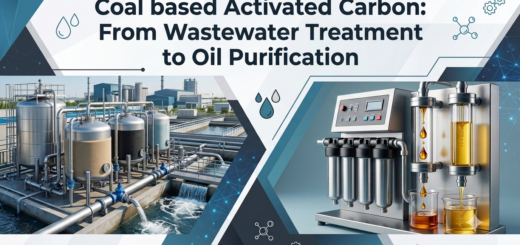
By the recent India’s CPCB and SPCB norms and the US EPA and European Union directives, it is clear that there are stringent water treatment rules before any industry release the wastewaters into the waterbodies. From pH to total suspended solids, everything will be monitored according to the given standards. So, almost all industries dealing with wastewater or those who discharge wastewater are relying on efficient activated carbon (AC) systems to treat the same before discharging.
These days, in most industrial purification systems (like Fixed Bed Adsorbers) experts are mainly relying on certain carbon formats. It is most commonly deployed in two configurations: Granular Activated Carbon (GAC) and Powdered Activated Carbon (PAC).
Choosing the wrong form can result in premature system failure, high operational costs, or inadequate contaminant removal. Understanding how these two variants interact with your water stream is the key to balancing cost and performance.
What Does Granular Activated Carbon (GAC) Involve?
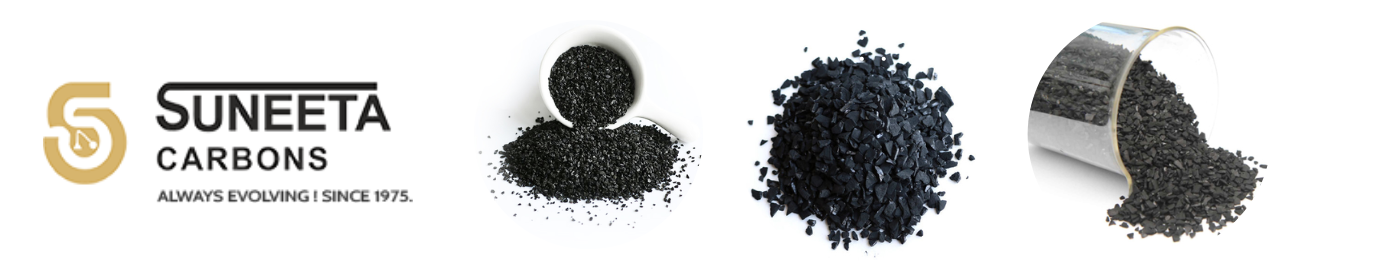
GAC is made of larger defined particles, usually between 0.2 mm and 5 mm, making it perfect to be used in fixed bed or packed bed filter column. Appropriate as water flows through these systems.
These systems are continuously flowing ones that flow through gravity- or pressure-fed systems. As the water passes through the bed, the contaminants are absorbed into GAC’s large internal pore structure.
Advantages of GAC:
- Improved Contact Time : The physical configuration of GAC provides a higher Empty Bed Contact Time (EBCT) for complex or low-concentration-level contaminants to have an extended amount of time to diffuse deep into the carbon pores.
- Thermal Reactivation and Reusability : When GAC is spent, it is able to be thermally reactivated, unlike many disposable alternative products. This allows the carbon to have all contaminants removed from the carbon surface area, restored back to its original adsorption characteristics, and reused in your filter multiple times.
- Optimal for Continuous System Use : Using a GAC filtration system requires little to no manual labour, making it the industry standard for high-volume, consistently operating automated filtration systems.
What Does PAC Stand For?
Powdered Activated Carbon (PAC) is a form of AC that has been fine-tuned and crushed down to an extremely fine powder. It has a high surface area and measures less than 0.15 millimeters in size. Because of this fine particulate nature, PAC cannot be placed in a fixed divided filter because it would cause an increase in the amount of pressure drop across the filter.
Here’s how it gets inducted : It is introduced into the water stream via batch dosing directly and thoroughly mixed into the water. It then adsorbs any contaminants present while remaining suspended in the water and is physically removed downstream from the water using coagulation, sedimentation, or sand filtration.
Benefits:
- Fast Kinetics : The ultra-fine particle size of PAC enables contaminants to be in close proximity to active surface areas within it, resulting in extremely high adsorption rates compared with granular types of activated carbon.
- Suitable for Shock Treatment : It can be used to rapidly control spikes of algae blooms, industrial spills, and odor compounds in your facility without requiring any modification to your existing facilities.
- Flexible Dosing : It can be dosed exactly as needed, resulting in minimal capital costs due to the simplicity of dry and wet feed systems.
Key Nuances Between The Two
Given below is a side-by-side comparison matrix that will help readers identify the performance metrics, which will help them make an informed decision:
| Feature / Metric | GAC | PAC |
|---|---|---|
| Particle Size | Big (0.2 mm to 5 mm); distinct granules. | Fine powder, generally less than 0.15 mm |
| Application Approach | Fixed or fluid beds; water passes through the media. | Direct batch dosing and mixing; filtered out later. |
| Adsorption Speed | Steady; needs structural contact time. | Prompt; immediate surface interaction. |
| System Compatibility | Continuous, automated, long-term operations. | Batch processes or intermittent, seasonal treatment. |
| Equipment & Handling | High initial equipment cost (vessels); low dust handling. | Low initial equipment cost; requires dust control. |
| Regeneration | Highly recyclable via thermal reactivation. | Non-reusable; discarded with the water sludge. |
Which is Better: GAC or PAC?
No one form of AC can be defined as “better” than another. The best option will vary based on your water chemistry, hydraulic design, and operating requirements:
- System Type and Flow Rate : GAC is ideal for continuous, high-volume applications, as it can run continuously on an automatic basis with little to no sludge buildup. PAC is typically recommended for batch or intermittent application.
- Contaminant Profiles : GAC is also better for stable, low levels of consistent contaminants, since GAC provides the required continuous levels of contaminant removal. PAC’s best use case is where the removal of contaminants is sudden and unexpected.
Applications in Water Treatment
GAC and PAC have important, although distinct, uses in industrial and municipal wastewater management systems.
- Drinking Water Filtration : Municipalities utilize large GAC filtration beds for the permanent elimination of synthetic organic chemicals from drinking water. However, during seasonal algae blooms that cause taste and odor problems, municipalities add PAC to the intake of the raw water on a temporary basis.
- Industrial Wastewater Processing : GAC filtration columns function as reliable polishing filters to remove trace toxins, heavy metals, and chemical byproducts prior to the discharge of the effluent.
- Reverse Osmosis Pre-Treatment (RO) : In order to protect sensitive RO membranes, GAC filtration should be provided upstream of the RO membrane to remove aggressive oxidants, such as chlorine, to prevent oxidative damage to this sensitive equipment.
Final Takeaway
Amidst this GAC (granular activated carbon) vs PAC (powdered activated carbon) debate, there is an interplay of process mechanics and economic factors determining which one is appropriate.
Opting for the right one for your industry use case is paramount. If you are still confused about which one to go with regarding particle size, pore geometry, and base material, you can contact our team at Suneeta Carbons. Being an ISO 9001:2015 certified manufacturer since 1975, we deliver high-end activated carbons that meet global standards.