Gold Recovery Process Explained: How Activated Carbon Helps Extract Pure Gold

The process of gold recovery is a specialized one that requires efficient and cost-effective methodologies to extract the precious metal from ore. One of the key vital elements in this process is activated carbon, a potential adsorbent that plays a key role in the distillation and purification of gold. Over the years, it has been proven that by incorporating activated carbon for gold recovery, industries can achieve high yields while reducing losses, rendering it an indispensable solution for mining operations across the globe.
Overview of the Gold Recovery Process
Since activated carbon used in the gold recovery process is derived from organic sources such as wood, coconut shell, and coal, its substantial surface area and robust adsorption capabilities make it a perfect element for trapping gold from cyanide leach solutions. And these methodologies are widely known as the Carbon-in-Pulp (CIP) and Carbon-in-Leach (CIL) methods. They are extensively used in the gold mining industry to seamlessly extract and recover gold from ore.
Let’s go through the step-by-step recovery process-
- Gold Leaching- involves crushing the ore and then applying a cyanide solution, which reacts with the gold to form a soluble gold-cyanide compound.
- Activated Carbon Treatment- The cyanide solution, which has dissolved gold, is then passed through activated carbon treatment, where the gold is adsorbed flawlessly onto the carbon surface.
- The Process of Elution- The carbon-laden gold is subsequently treated with a peeling solution to release the gold, which is then fetched for further refining.
- Revival of Activated Carbon- the cast-off carbon undergoes thermal treatment to eliminate impurities and revive its adsorption capacity for reuse.
What Is the Role of Activated Carbon in Gold Recovery
The role of activated carbon is very pivotal in the extraction and recovery process. As the ore is compressed and transformed into a slurry, gold particles become suspended in a liquid mixture. This is the exact moment when activated carbon is introduced into the process. When injected into the slurry, it acts like a magnet for gold, attracting and caging the minute gold particles, flawlessly pulling them from the solution.
Here, the adsorption capability of activated carbon helps in the overall methodology. Its wide network of pores (micro and mesopores) forms a substantial surface area, rendering it highly efficient for adsorption. Eventually, gold ions and particles present in the solution are drawn to these tiny pores through an amalgamation of attractive forces and chemical affinities.
Benefits of Using Activated Carbon in the Gold Recovery Process
There are three key benefits of using activated carbon in terms of gold recovery. Given are the respective ones-
- High adsorption capacity of activated carbon ensures that a higher percentage of the gold from the cyanide solutions is recovered.
- Considered as the most cost-effective because it prevents gold losses and enhances overall yield.
- As mentioned earlier, activated carbon can be regenerated and reused multiple times, boosting operational efficiency.
Why Coconut Shell-Based Activated Carbon Is Preferred
While there are other types of activated carbon used in gold recovery, which are derived from different sources like wood, cola, etc., coconut shell-based activated carbon is the most effective in this process. This is because of the unique properties that it has. Here are the key insights-
- Its high hardness and low attrition property minimize the loss of carbon particles during handling and adsorption cycles.
- Its microporous structure offers a high surface area for maximum adsorption capacity as compared to coal or wood-based types.
- Its uniform particle size guarantees consistent adsorption kinetics and minimizes clogging in the recovery system.
CIP vs CIL Process – Key Differences
While both processes are used in gold mining from ores by incorporating a cyanide solution and activated carbon, there are some major differences between them. Let’s decode them, one by one-
| CIL | CIP |
| Carbon-in-Leach: This gold extraction technique involves the parallel processes of cyanide leaching and carbon adsorption across multiple interconnected tanks | Carbon-in-Pulp: In this gold withdrawal technique, cyanide leaching and carbon adsorption take place in the same tank |
| Needs a larger quantity of carbon | Needs a smaller quantity of carbon |
| The aggregate carbon concentration in the slurry is lower | The aggregate carbon concentration in the slurry is higher |
| Proves to provide a bit higher gold recovery percentage due to the uninterrupted interplay between carbon and the leaching solution | Has a lower percentage of gold recovery |
| It’s a sophisticated process with numerous equipment | This process is easy to conduct and has less equipment involved |
Factors That Affect Gold Recovery Efficiency
The efficiency of gold recovery process is heavily influenced by the adsorption rate (R-value) and the adsorptive capacity (K-value) of the coconut-based activated carbon. Greater K values indicate a higher capacity to load gold onto the carbon, while greater R-values guarantee prompt adsorption.
Given below are the factors that impact performance-
- Particle size distribution: Smaller particles enhance surface area but may result in clogging
- Mechanical strength: Averts attrition during continuous use, ensuring a longer life span for the carbon
Why Choose Suneeta Carbons for Gold Recovery Applications
While there are several organizations offering various activated carbons for gold recovery, Suneeta Carbons stands out even in this competitive market. Well, the reasons are many, but the primary highlight is what our potential buyers count, which is- the unparalleled quality of activated carbon for gold recovery.
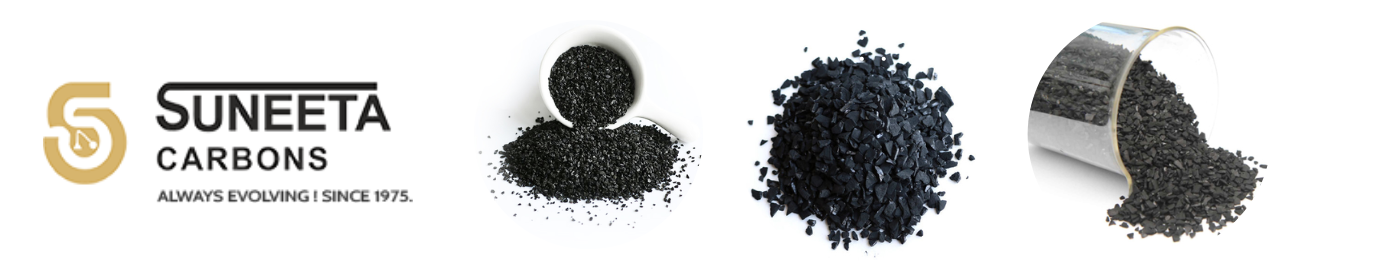
And we rightly offer so, by delivering unmatched activated carbon for gold recovery solutions (SunCarb-Gold™). While our source material is coconut shell-based activated carbon, we incorporate the best equipment, which ensures that the activated carbon has optimum properties such as particle size, moisture, bulk density, etc. Moreover, our state-of-the-art packaging promises a safe delivery throughout its journey to your intended address.